Measles Outbreaks: Vaccine, Symptoms & Prevention Tips
Measles outbreaks can cause serious health complications and even death, especially in children under the age of 5. Measles is a highly contagious airborne viral infection that affects only humans and is one of the leading causes of mortality in children under the age of 5 worldwide.
The virus, which can lead to severe complications or even death, has been experiencing a resurgence in many parts of the world in recent years, including the United States. Outbreaks are more likely to occur in communities where groups of people are unvaccinated.
Measles caused approximately 500 deaths per year in the United States prior to the introduction of the live-attenuated vaccine in 1967, Dr. Di Pentima explains, and in 1989, the U.S. Public Health Service recommended a two-dose schedule. After implementation of the new immunization schedule, the number of cases dropped by 99 percent. Today, measles is no longer considered an endemic disease in the U.S.
How Does Measles Spread?
Transmission occurs by contact with a patient who has measles. Infectious respiratory droplets from an infected person can remain suspended in the air for up to two hours. Therefore, face-to-face contact is not needed to become infected.
Public spaces, schools, airplanes, and airports are potential sources of outbreaks from airborne exposure to a single infected person, even if this person has not yet developed symptoms.
“Individuals who have not been vaccinated, did not respond to the vaccine or lose vaccine protection because of a weak immune system (immunocompromised) are at 90 percent risk of becoming infected,” says Dr. Di Pentima.
Is Measles Still a Threat?
The World Health Organization in 2002 declared the elimination of measles on the American continent, but the disease could not be eradicated because of imported cases from other parts of the world.
Since 2008, the number of cases of measles began to increase, with the highest number of cases in the U.S. confirmed in 2019 at 1,282. According to the Morbidity and Mortality Weekly Report (MMWR) 2019, most of the cases occurred in outbreaks of unvaccinated individuals living in under-vaccinated communities. Most cases imported from other countries happened in unvaccinated U.S. residents returning to the States. While the U.S. is considered measles-free, the American continent lost its elimination status after measles became endemic in Venezuela in 2018 and Brazil in 2019, according to the MMWR 2021.
Dr. Di Pentima says published data estimates that the risk of becoming infected if not previously vaccinated or infected with measles is 224 higher than for those who are immunized.
Number of Measles Cases Dropped in 2020
In 2020, the number of cases in the U.S. dropped because of mitigation strategies recommended to prevent COVID-19 infections and decreased surveillance. However, the pandemic also limited access to preventive care and immunizations favoring the spread of preventable diseases, including measles, worldwide.
How to Prevent Measles
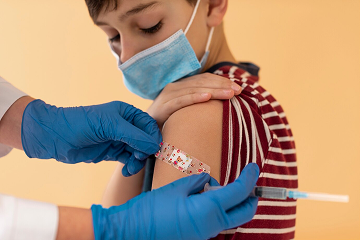
Measles, mumps, and rubella (MMR) immunization, which has been deemed safe and effective by the CDC and FDA, is the best prevention strategy against measles, says Dr. Di Pentima. A single dose of the measles vaccine provides 95 percent protection against infection, and that increases to 96 percent after the second dose.
The first dose of MMR vaccine should be administered at 12 through 15 months of age, and the second dose is recommended before starting school, she explains. When more than 95 percent of people in a community are vaccinated, most people are protected through community immunity or herd immunity.
In an outbreak, or before international travel, this recommended schedule can be modified to provide protection at a younger age, or to boost protection by reducing the interval between doses. The recommendations must be discussed with a physician. Measles outbreaks can be stopped through early diagnosis and notification of cases, isolation of infectious cases, and identifying contacts.
Measles Outbreaks in the U.S.
The CDC shares up-to-date information on measles outbreaks in the U.S., including number and location of cases, age distribution, and vaccination status. For the latest information on measles outbreaks near you, or in places where you plan to travel, reference the CDC’s Measles Cases and Outbreaks reporting.